
Dear reader,
Wealthy Affiliate community features get less attention than the training, the website tools and the programs themselves. That is a shame, because a beginner working alone on a niche like promoting Wealthy Affiliate programs has one problem that no lesson fixes: nobody is nearby to say “yes, that looks right” or “try it this way.” The community is where that someone lives.
This article stays with people and collaboration. Each section gives you one small move, and you can do any of them in a few minutes.
Why the community is the feature people forget to count
When you list what a membership gives you, the items that are easy to count come first: lessons, tools, a website. A community is harder to put on a list, so it gets filed under “nice extra.”
That filing is a mistake for beginners, because working alone is where most beginners stall. A lesson tells you what to do. It cannot tell you whether you did it correctly, and it cannot notice that you have gone quiet for a week. Other members can do both.
There is also a practical point. Affiliate work involves many small decisions with no obvious right answer: which topic to write about next, whether a post is clear, how to word something. Every one of those decisions goes faster when a second pair of eyes is available.
Count the community as a working part of your setup, the same way you count your website.
Asking a question the right way (and getting a real answer)
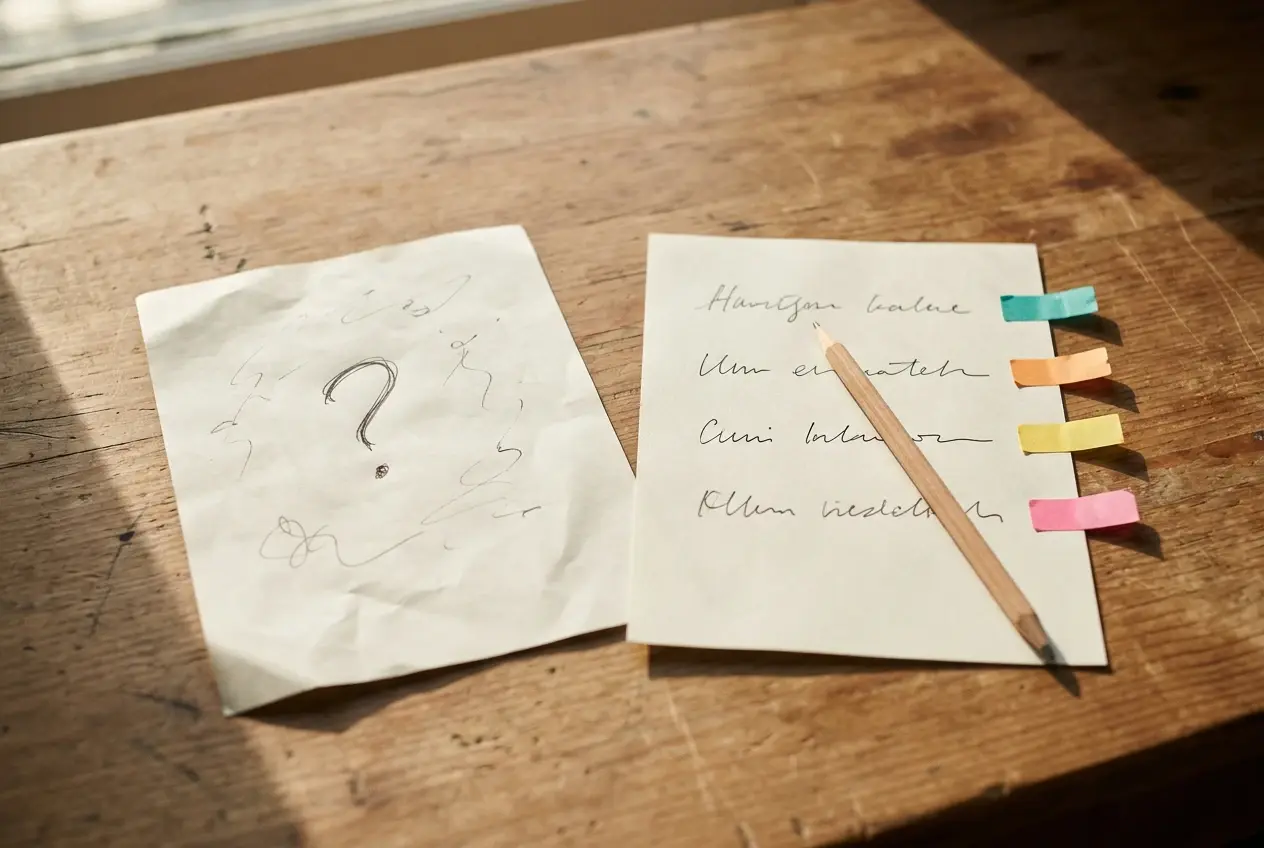
A vague question gets a vague answer, or none. “Can someone help me with my site?” gives readers nothing to grab. They would have to guess what you mean before they could reply, and most people will not.
A good question has four parts:
- What you were trying to do. One sentence.
- What happened instead. Describe what you saw, not how it felt.
- What you have already tried. This tells readers which suggestions to skip.
- What kind of answer you want. A fix, an opinion, or a pointer to the right lesson.
Compare “My post isn’t working” with “I published a post about choosing a first affiliate program and I’m unsure the headline matches what the post delivers. Does the headline promise too much? I’d like an honest opinion.” The second one can be answered in thirty seconds by a stranger.
Check whether your question has already been answered before you post it. Searching first often gives you the answer immediately, and when it does not, you can say what you found and what was missing, which makes your question better.
Say thank you when you get an answer. It takes five seconds and makes people more willing to help you the next time.
Commenting on other members’ work to get noticed
Every member who shares a post, a question or a small win is hoping somebody will respond. A useful comment is one of the quickest ways to be remembered as a person instead of a username.
“Great post!” is pleasant and forgettable. A comment with substance does more:
- Name one specific thing that worked, such as a clear headline or a helpful example.
- Ask one genuine question about their approach.
- Offer one small suggestion, phrased as something you would try, not something they got wrong.
Three sentences is plenty. You are not writing a review. You are showing that you read it.
This also helps you in a quieter way. Reading other members’ work shows you how people in your position structure posts, pick topics and handle the same obstacles. You learn from every comment you write, and the author sees your name attached to a thoughtful remark. Names that appear repeatedly attached to useful remarks get recognized.
Finding your people: accountability and friendly collaboration
Some members will be further along than you, some at the same point, and some just starting. All three groups are worth knowing.
Look for people who share some part of your situation: a similar niche, a similar stage, or the same habit of working in short bursts. When you see the same name turning up in conversations you like, that is a good sign.
Accountability does not need to be formal. A simple version looks like this:
- Message one member and suggest a small exchange: each of you names one move for the week.
- At the end of the week, each reports back in a sentence: done, partly done, or not done.
- Repeat if it was useful. Drop it without hard feelings if it was not.
Keep the commitment small enough that it survives a busy week. A tiny promise that gets kept builds more momentum than a big one that quietly lapses.

Friendly collaboration can be just as modest. Two members can read each other’s drafts, trade headline ideas, or compare notes on a lesson that confused them both. Neither person has to be an expert. Fresh eyes catch things that the author has stopped seeing.
Showing up to LIVE sessions inside Learn
LIVE is where live classes happen inside Learn, and the recordings are kept there too. Attending one gives you something a recording cannot: the chance to ask your question while the person who can answer it is present.
Here are some ways to get more from a session:

- Arrive with one question written down. Live sessions move quickly, and a prepared question is easier to ask than one you invent under pressure.
- Write down one action. Not a page of notes, just one thing you will do afterward.
- Say hello if there is a chance to. Even a short message makes you a participant instead of a spectator.
If the timing does not suit you, the recording is still a good use of an evening. Watch it with the same habit: pick one action and do it before you close the page.
Sessions also show you who else is learning alongside you. Names you recognize from a live class are easier to approach later, because you already have something in common.
Giving back: how helpcging others builds your name
You do not need to be an expert to help. You only need to be one step ahead of somebody, and as a beginner you are probably one step ahead of someone who joined more recently.
Here are some small ways to help:

- Answer a question when you know the answer, even if it is a partial one. Say what you know and say where your knowledge stops.
- Point someone to a lesson that helped you with the same problem.
- Share a small result or a small mistake, along with what you learned from it. Other beginners find that more useful than polished success stories.
- Give feedback when someone asks for it, kindly and specifically.
Helping also reinforces your own learning. Explaining something to another person shows you quickly whether you understand it. If you stumble, you have found the exact part to go back and review.
There is a reputation effect too, though it should not be the reason you do it. People who regularly help are the ones others think of when an opportunity or a question comes up. Over time, your name becomes associated with being useful. That is a good thing to have in any online business, and it is especially good when you are promoting programs, because readers and fellow members trust people who have been generous with their time.
Your one move for today
You do not need to do everything in this article. You need to do one thing, and then stop.
Pick one of these:
- Ask one question, using the four-part structure above.
- Answer one question that you know something about.
- Leave one specific comment on another member’s post.
- Send one message proposing a weekly check-in.
- Put one LIVE session on your calendar, and write your question for it.
Choose the one that feels least intimidating. Do it, and let that be the whole task for today. If you would like to see how small moves like this fit into a regular rhythm, my own weekly routine shows one way to organize them.
Pick one community move today, such as asking one question or answering one, and then do only that.
Thank you for reading.
If you wish, please leave a comment in the box below.
Your friend,
Maxine 🙂
myroyalwealth.com