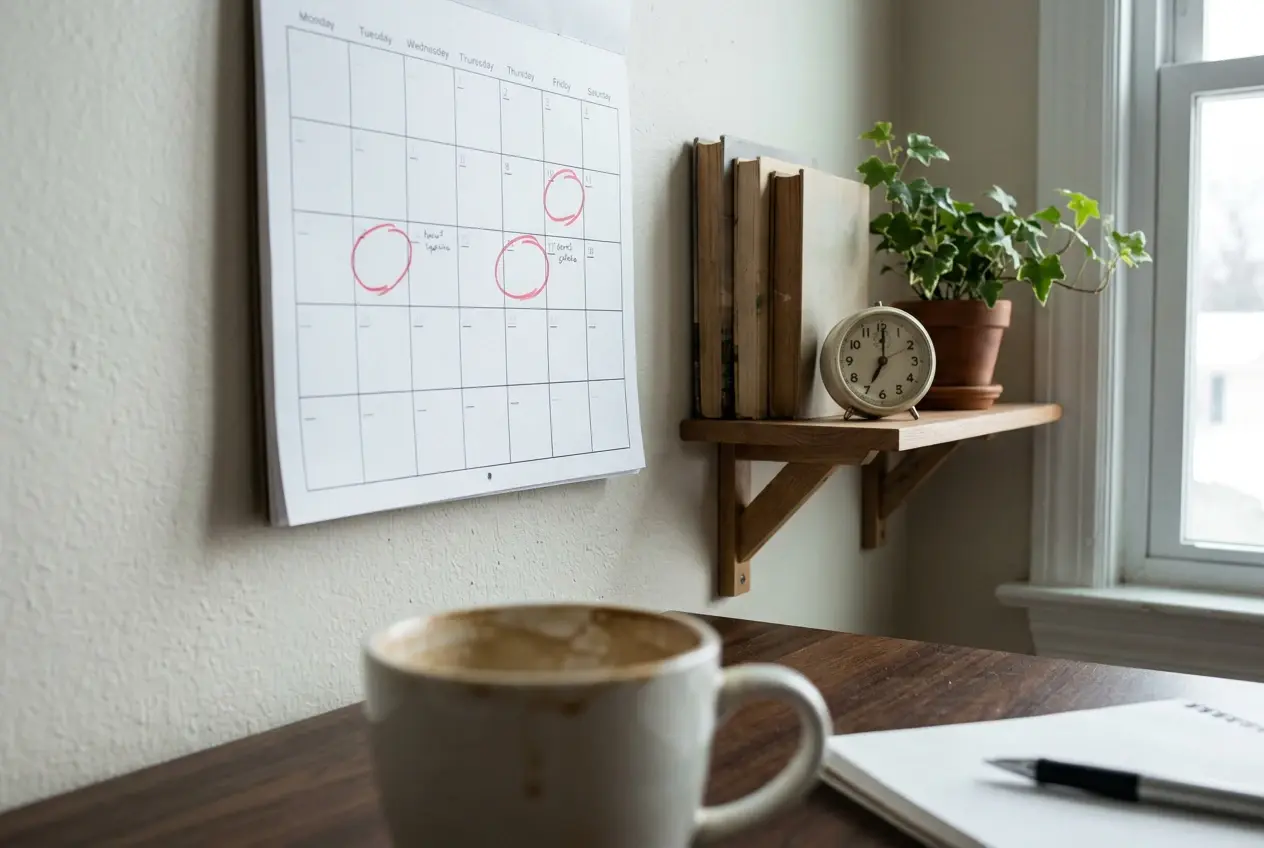
A Wealthy Affiliate roadmap for 2027 can fit on one page: four quarters, one move at a time, and a decision about how you will earn that you make around the middle of the year instead of on day one. This one is built to be copied and edited. If you don't know yet how you will earn, the plan has room for that, because choosing is one of the scheduled moves.
Start from where you are in November, not where you wish you were
Today is November 10, which leaves a little under seven weeks of 2026. That is enough time for a short inventory, and a bad moment to start something large.
Take twenty minutes and answer three questions on paper:
How many articles or pages are actually published on your site right now?
Which half-finished things are sitting around (drafts, unfinished lessons, a niche you keep rethinking)?
How many hours a week can you honestly give this, on a normal week and not your best one?
Write the hours number lower than you want it to be. A plan built on six hours you will really work beats a plan built on fifteen you will not. Everything below scales to your number.
One move at a time is the whole system
A move is one piece of work small enough to finish in a single sitting, with an obvious end. "Write the outline for one article" is a move. "Work on my website" is a direction, and it never tells you when you are done.
Finishing a move gives you information: you learn how long it takes, whether you like doing it, and what the next move should be. Five unfinished things give you nothing except a vague sense of being behind. The word also matches Learn, where each Focus is built from moves you can Ask, Watch or Read, so the same habit carries across your training and your site.
January to March: build the habit before chasing income
The first quarter has one job, which is to make showing up ordinary. Income is not the measure here. The measure is how many of your planned sessions you actually sat down for.
Here is a set of moves you can use or replace:
Week 1: choose your session days and times, and put them in a calendar with an alarm.
Weeks 2 to 4: keep a running list of article ideas, with a single sentence on who each one helps.
February: publish on a steady cadence you picked in January. Choose a pace you can keep, even if it is only one article every two weeks.
March: reread what you published and fix the clumsiest paragraph in each piece.
Because your niche is promoting Wealthy Affiliate programs, a good source of ideas is the questions a newer member would ask a few weeks after joining. Write those down as they occur to you, and answer one at a time.
At the end of March, check one number: planned sessions against completed sessions. If you completed most of them, the habit is working. If you did not, shrink the plan before you add anything. Two sessions a week that happen are worth more than four that don't.
April to June: pick how you'll earn, even if you're still unsure
Your profile says your plan for earning is still open, so this quarter makes the choice. Waiting for certainty is the usual reason people put the decision off for a year. By April you will have three months of writing behind you, which tells you more about your readers than any amount of thinking in advance.
Treat the choice as a trial with a review date. A reasonable sequence:
April: list the two or three ways you might earn. For a site about Wealthy Affiliate programs that could be promoting Wealthy Affiliate itself, another affiliate program that suits the same readers, or a mix.
May: compare them using plain questions. Does it fit the people reading your articles? Is the payment a one-time commission or does it recur? Can you describe it honestly from what you know? The post on how to choose your first affiliate program without overthinking it walks through this decision in more detail.
Late May: pick one. Write the choice and the date you will review it, for example the end of September.
June: publish content around that choice, including a clear disclosure wherever you link to a program you earn from.
The pick is allowed to be provisional. A decision you can revisit in September is easier to make than a permanent one, and it still gives you something real to measure.
July to September: publish, check what happened, and tidy up
The third quarter is for output and for looking at results. By now you have a habit and a direction, so most of your moves are publishing moves.
Once a month, set aside one session for a check. Look at whatever visitor numbers your site shows and ask a few specific questions:
Which pages get visits, and which get none?
Did anyone click through to the program you chose?
Which article answers a question people are clearly searching for, and could it be longer or clearer?
Keep the conclusions modest. A few weeks of numbers on a small site are noisy, so look for obvious patterns and ignore tiny differences.
Tidying is also a legitimate move, and it is easy to skip. Fix broken links, update posts that mention an old year as if it were current, tighten titles that run too long for search results, and make sure each page has one clear idea under its heading. A site that is a little smaller and cleaner reads better than one that keeps growing in every direction.
At the end of September, hold the review you scheduled in May. Did the way of earning you chose get any attention from readers? Keep it, adjust it, or swap it for the other option on your list. Whichever you choose, write the decision down with the reason.
October to December: decide what stays, what goes, and what grows
The last quarter is for sorting. Make three piles from everything you have built this year: articles, topics, habits and the way of earning you chose.
Stays: things that work well enough and cost little to maintain. Leave them alone.
Goes: things that brought no visits, no clicks and no interest from you. Retire, merge or rewrite them. Cutting a topic after a fair trial is a result, because now you know.
Grows: the one or two things that showed a sign of life. Give them the most of your sessions in the final months, with updates, follow-up articles and better internal links between related pages.
Be strict about how many things go in the "grows" pile. Two is plenty. Growth needs sessions, and you have a fixed number of them.
In December, write next year's roadmap in this same format, using what you now know about your hours, your readers and your earning choice. It takes less time than this year's version because you are editing a page you already trust.
When the week goes sideways: how to keep the plan alive
Some weeks will collapse. Work runs long, someone gets sick, or you simply do not feel like it. The plan should assume this will happen several times and keep going.
A few rules that help:
Keep a minimum move. Choose something that takes fifteen minutes, such as rewriting one headline or reading one lesson. On a bad week, do only that.
Do not double up. After a missed week, do not try to do two weeks of work. Pick up the next move where you stopped.
Cut from the bottom. If you fall a few weeks behind, drop the lowest-value move of the quarter instead of squeezing everything in.
Write down where you stopped. One sentence at the end of each session saying what the next move is makes restarting much easier, because you never have to decide what to do first.
A quarter in which you finished six moves is a good quarter, even if the plan listed ten.
Pick one move for your first week of January and write it down before you close this tab.
Thank you for reading. Your thoughts are welcomed.